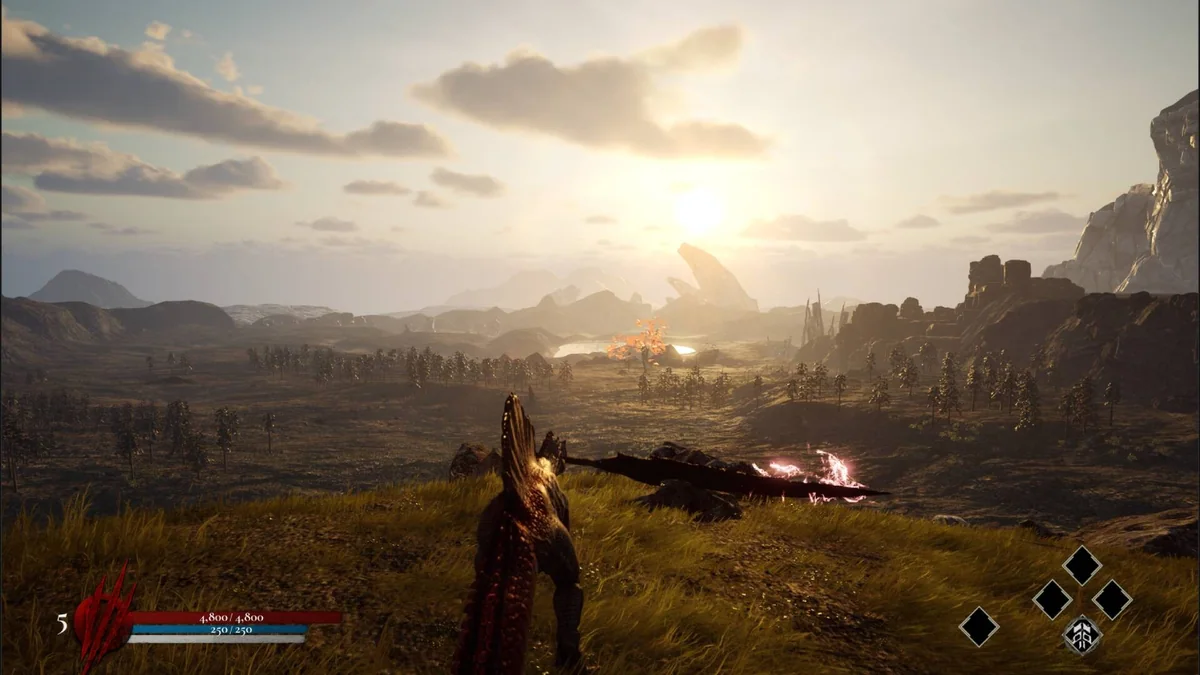
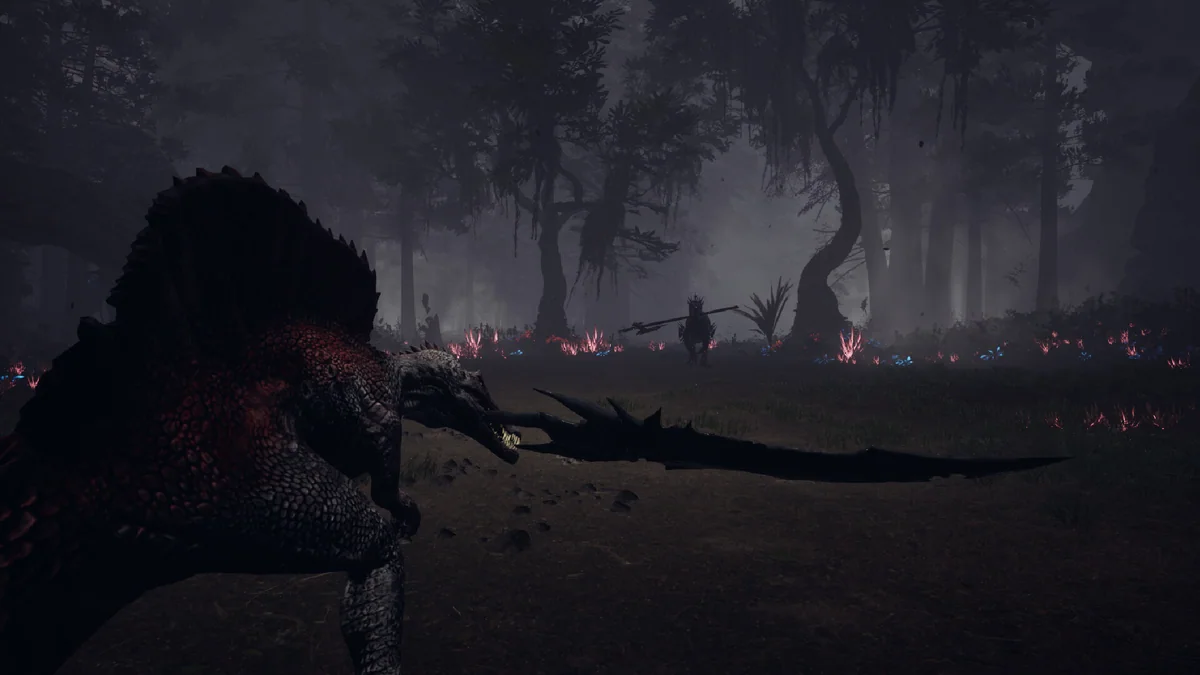
Your first objective is control, not damage
Begin by separating movement, camera control, target lock, light commitment, heavy commitment, block, dodge, roll, parry, healing, and interaction in your mind. Do not test every input in the middle of the same dangerous exchange. Find a low-pressure space, verify the binding, then deliberately perform one action at a time. The launch-week patch notes show that key binding and controller behavior have already received fixes, so checking your actual current layout is safer than copying an old diagram from a demo build.
During an encounter, watch the opponent’s weapon or striking limb more than its overall body. A dinosaur fills the screen, but the full silhouette is not the timing cue. Look for the point where an attack stops preparing and begins travelling. One clean observation is more valuable than several rushed attacks. If you cannot explain why you were hit, use the next attempt to observe rather than to win.
Treat your Great Sword as a commitment tool. The game promotes powerful combos, but a combo is useful only when the target stays exposed. Start with the shortest sequence that lets you return to defense. Add another hit after you can consistently recognize the recovery window. This creates a stable baseline before skills and weapons multiply your options.
- Verify bindings in the current build.
- Learn one defensive response at a time.
- Use short attack sequences until recovery timing is familiar.
Give every defensive action a job
Blocking, dodging, rolling, and parrying should not become four names for panic. A block is a conservative answer when you know contact is coming but do not yet trust the exact release. An evasive step can preserve position when the path is clear. A roll is a larger relocation whose recovery may leave you unable to answer immediately. A parry is the precise choice: it asks you to meet a readable strike, so it should be practiced against an attack you already recognize rather than attempted against every motion.
The March 29 demo update stated that blocking works regardless of attack direction and added target lock for mouse and keyboard. The full release may continue to evolve, but this official note explains why a beginner should test block and lock-on early. Neither tool replaces camera awareness. Large enemies and arena edges can hide the follow-up, so periodically reset your view and move away from geometry that compresses the fight.
After taking damage, resist the urge to heal at the first possible animation gap. Ask whether the opponent has finished a sequence, whether distance is actually safe, and whether the camera shows the entire threat. A heal that begins during an unverified pause can cost more health than it restores. Create distance first, face the threat, and use a genuine recovery window.
Read each region as preparation for its Alpha
The official store page describes dry canyons, dense mist-shrouded jungles, and other biomes, each ruled by an Alpha that guards the route forward. Explore with that structure in mind. Regular enemies teach attack shapes, sightline problems, and spacing pressures that may matter at the region’s climax. Do not sprint past every encounter and arrive at the Alpha without having practiced the biome’s visual language.
When you discover a route branch, collectable, skill opportunity, or weapon, note how it changes your available answers rather than assuming a higher-looking number solves the next fight. A new ability may improve pressure, movement, or recovery. A legendary weapon may ask for a different commitment rhythm. Test additions against a familiar enemy before building a strategy around them.
Use saves, checkpoints, or equivalent safe interactions as deliberate review points. The October 2025 official demo note said heal potions were refreshed at save interaction after a change, but exact release behavior should be verified in your current build. The durable habit is to use every safe return as a moment to check resources, bindings, and the next learning goal.
Turn Alpha attempts into short experiments
An Alpha attempt becomes useful when it answers one question. On the first entry, identify the arena boundary, camera hazards, and the safest distance for observation. On the next, confirm the opening attack. Later attempts can test one defensive response or one punish window. Trying to solve positioning, timing, healing, combos, and every later phase at once produces noise instead of knowledge.
When an attack defeats you repeatedly, reduce the exchange. Enter its range without attacking. Watch the preparation, release, travel, impact, and recovery. Decide which moment is actually readable. Then choose block, dodge, roll, distance, or parry before the next attempt begins. Preselecting the response prevents a different panic input each time and makes the result interpretable.
Launch patches on July 23 and July 25 included boss balance changes, and the July 25 note mentioned an ending quick-time-event bug fix. A guide that promises a permanent frame-perfect script would age badly. The more resilient approach is to learn cues, safe spacing, and recovery states while checking the official update history whenever behavior appears inconsistent with an older video.
A compact first-session checklist
Before leaving your first familiar area, you should be able to trigger every core input intentionally, finish a short attack without mashing, defend one known strike, create a safe healing window, and restore camera control after a large enemy crosses the screen. You do not need perfect parries. You need a repeatable answer that keeps you alive long enough to keep learning.
Continue forward when ordinary encounters feel explainable, not necessarily effortless. Spend discoveries rather than hoarding them for an imagined perfect build, but test one change at a time so you know what helped. At an Alpha, prioritize recognizing the next attack over squeezing in one more hit. After victory, revisit the broader map with your expanded strength, skills, abilities, or weapons in mind.
The final boss is not the end of the learning path: the official store page says defeating it unlocks Boss Rush Mode. That endgame loop rewards the same habits established here—clean observation, controlled commitment, and a specific plan for each failed exchange.
- Control every core input on purpose.
- Recognize at least one reliable defensive cue.
- Keep the camera and arena edge in view.
- Check official patches when behavior changes.
Primary sourceOfficial Steam description and announcements ↗